Donelson Files is a podcast that features politics, culture and entertainment. The webpage will include writers from right to left, discussing politics, sports, entertainment, culture and include photos, art and poetry.
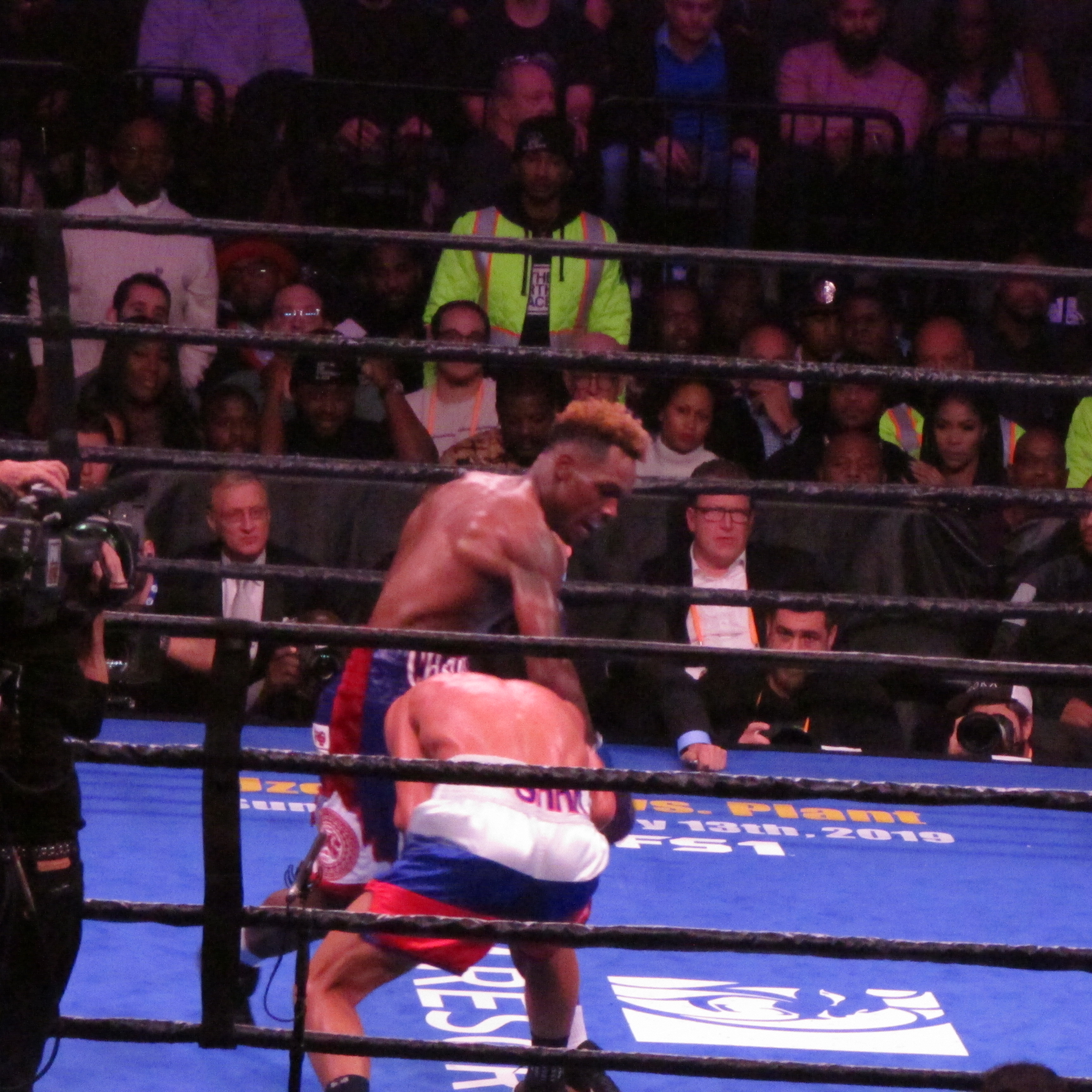
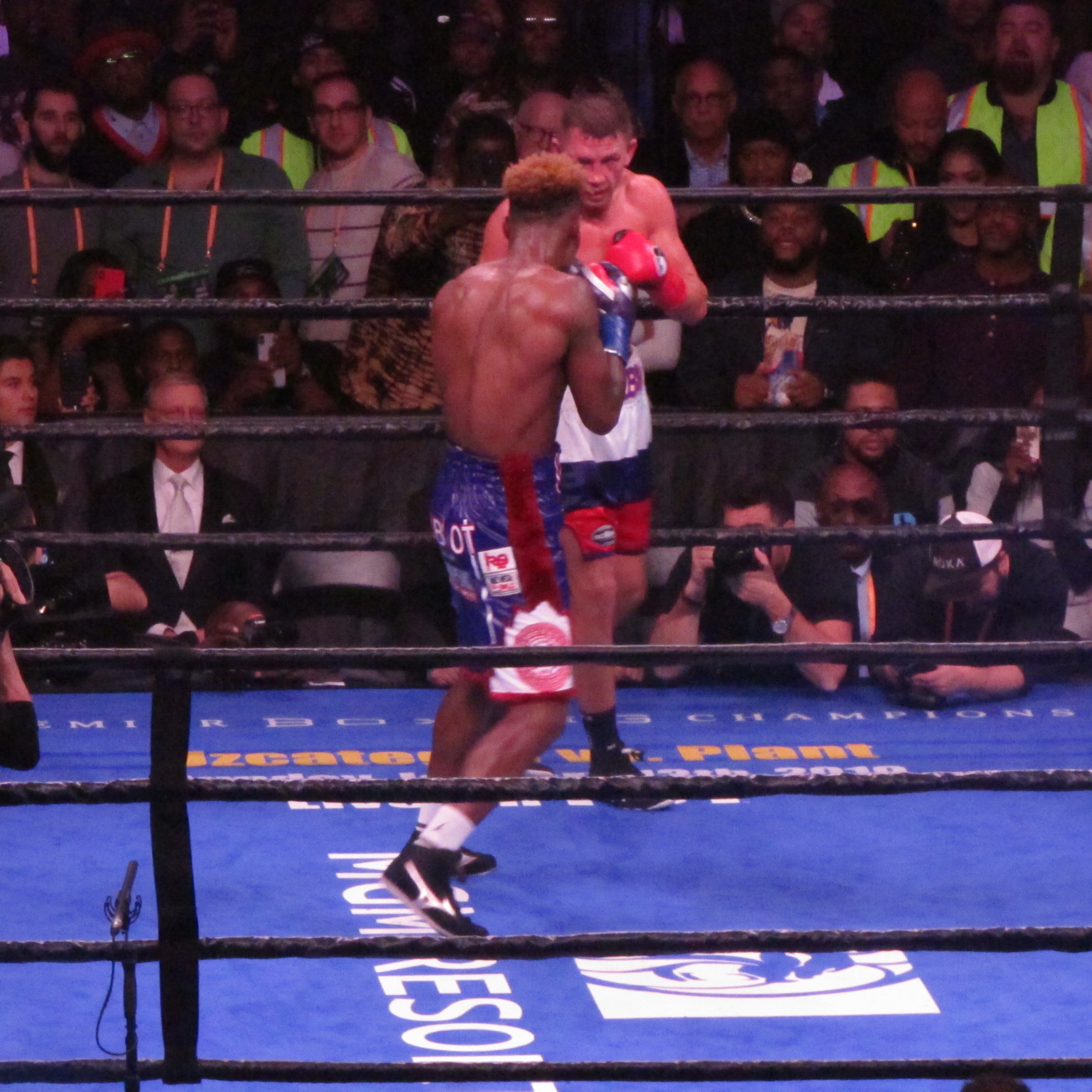
Boxing is the theater of the unexpected and one of the most unpredictable thing to predict is how a judge will view a fight. Jermell Charlo/Tony Harrison fight was one of those fights that many of us watching the fight saw Charlo the winner but the judges had it for Tony Harrison. Charlo was the aggressor throughout the fight and landed an average of three punches more per round and I had him up by117-111. While much of the audience were stunned, Charlo allowed Harrison to stay in the fight. He never dominated the fight as the favorite he was and while he stunned Harrison in the last round, he could not finish off Harrison. Compubox saw that Charlo landed more punches in 9 of the 12 rounds but many of these rounds were close and decided by a punch or two so we saw many close rounds, very similar to the Fury-Wilder fight in which there were many close rounds. The difference in the Charlo-Harrison fight was that Charlo never had Harrison in trouble until the twelve whereas in the Fury –Wilder fight, Wilder twice nearly stopped the bout but for the ability of Fury to remained standing against two very brutal knockdown that would have stopped most fighters.
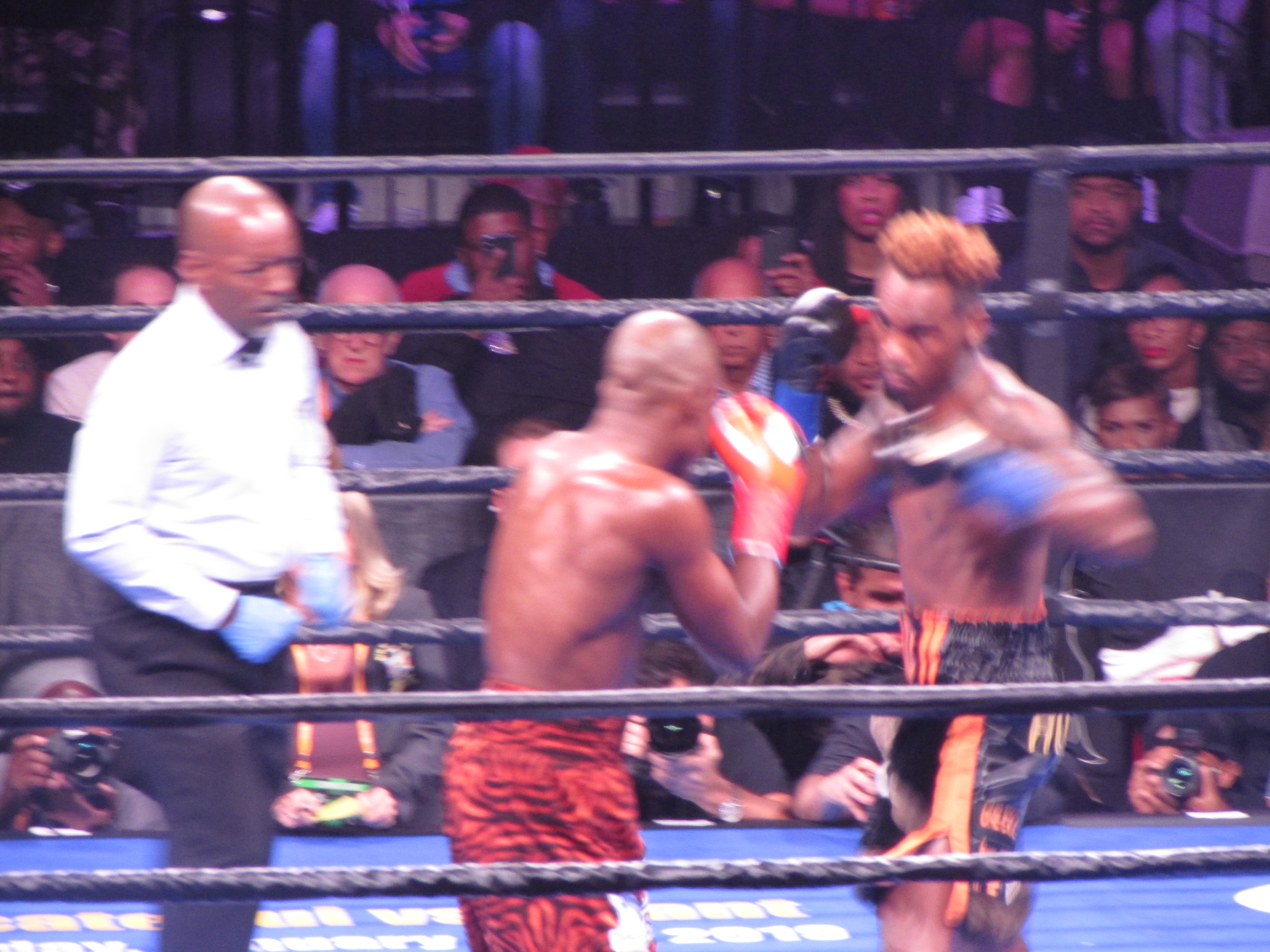
Jermell Charlo may have shown that he would certainly be an underdog against Jarrett Hurd, who is probably the best Super Welterweight in the world and who stopped Harrison when they both fought. Charlo fought a tactical fight and while he was the aggressor, Harrison did effective counterpunching at selected times in the fight. In my view, there were four rounds easy to score but there were eight rounds that were close as Compubox numbers attest. The judges gave most of those rounds to Harrison and they were more impressed with Harrison’s counter punching than Charlo aggressive tactics.
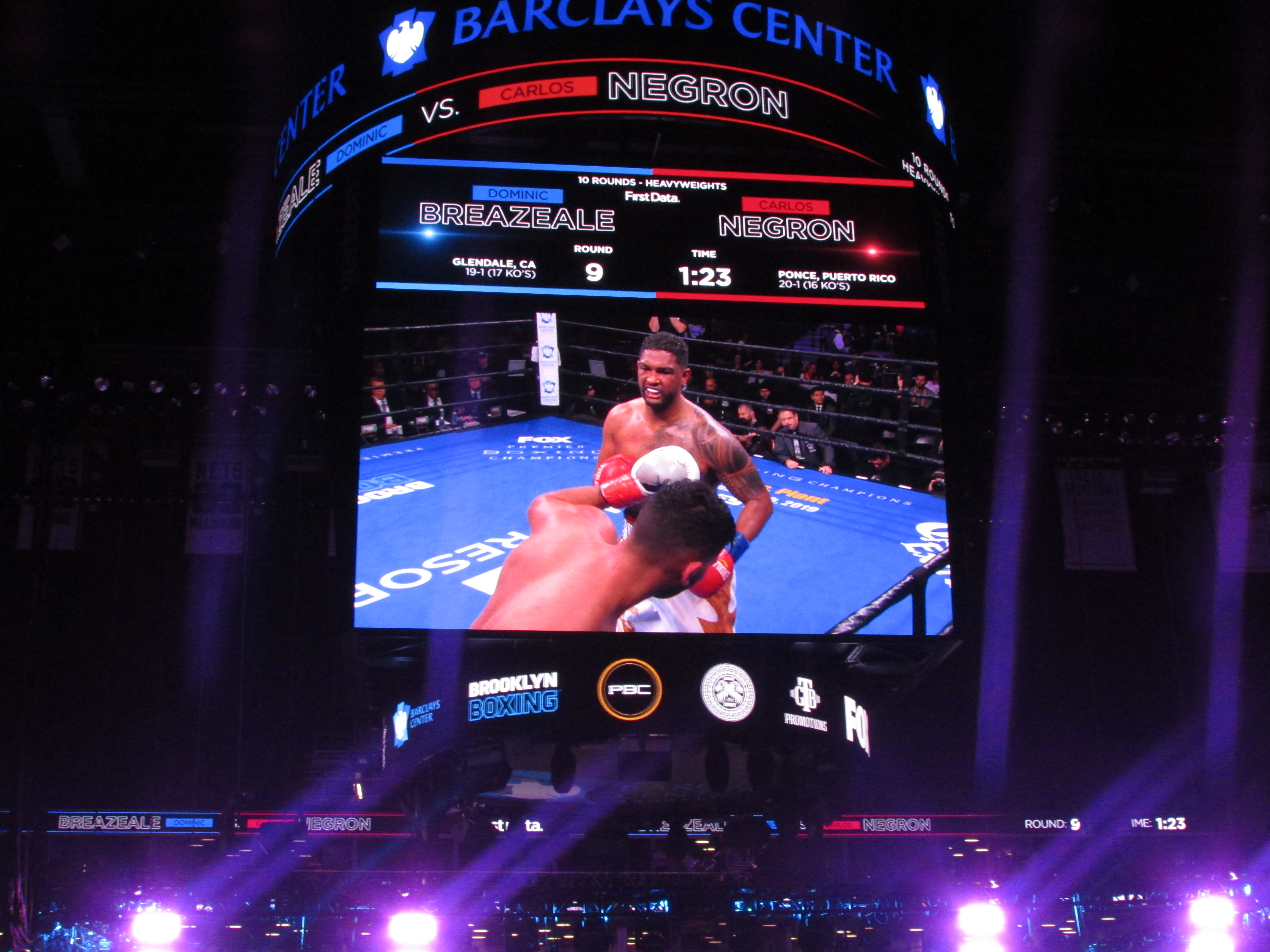
Dominic Breazeale scored a one-punch knockout of Carlos Negron in the ninth round of an entertaining heavyweight bout. Breazeale, with his eyes on Wilder’s belt and with Wilder in the audience watching, was hoping to make a statement. While Breazeale dominated most of the fight, it was not an easy fight as Negron landed a few solid shots of his own as a counter puncher. Breazeale nearly ended the bout at the end of the fourth round when he landed a big right as the bell ended the round, but in the fifth and throughout the sixth, Negron came back with counterpunches of his own and gave himself a chance at an upset. Breazeale finally got control of the bout in the seventh round as his strength took hold and in the ninth, he ended with one big right hand.

Breazeale went on to challenge Wilder after the fight for a shot at his title but we won’t know whether Wilder will give him that shot or look for a bout with Anthony Joshua or rematch with Tyson Fury. Regardless, Breazeale got himself in line for a title shot but right now, the heavyweight has a logjam as Fury draw with Wilder has produced a three way jam at the top with Fury established as a legitimate threat to Joshua-Wilder reign as the best heavyweight and Dillion Whyte late stoppage of Dereck Chisora puts him in the conversation as a title contender, maybe in front of Breazeale.
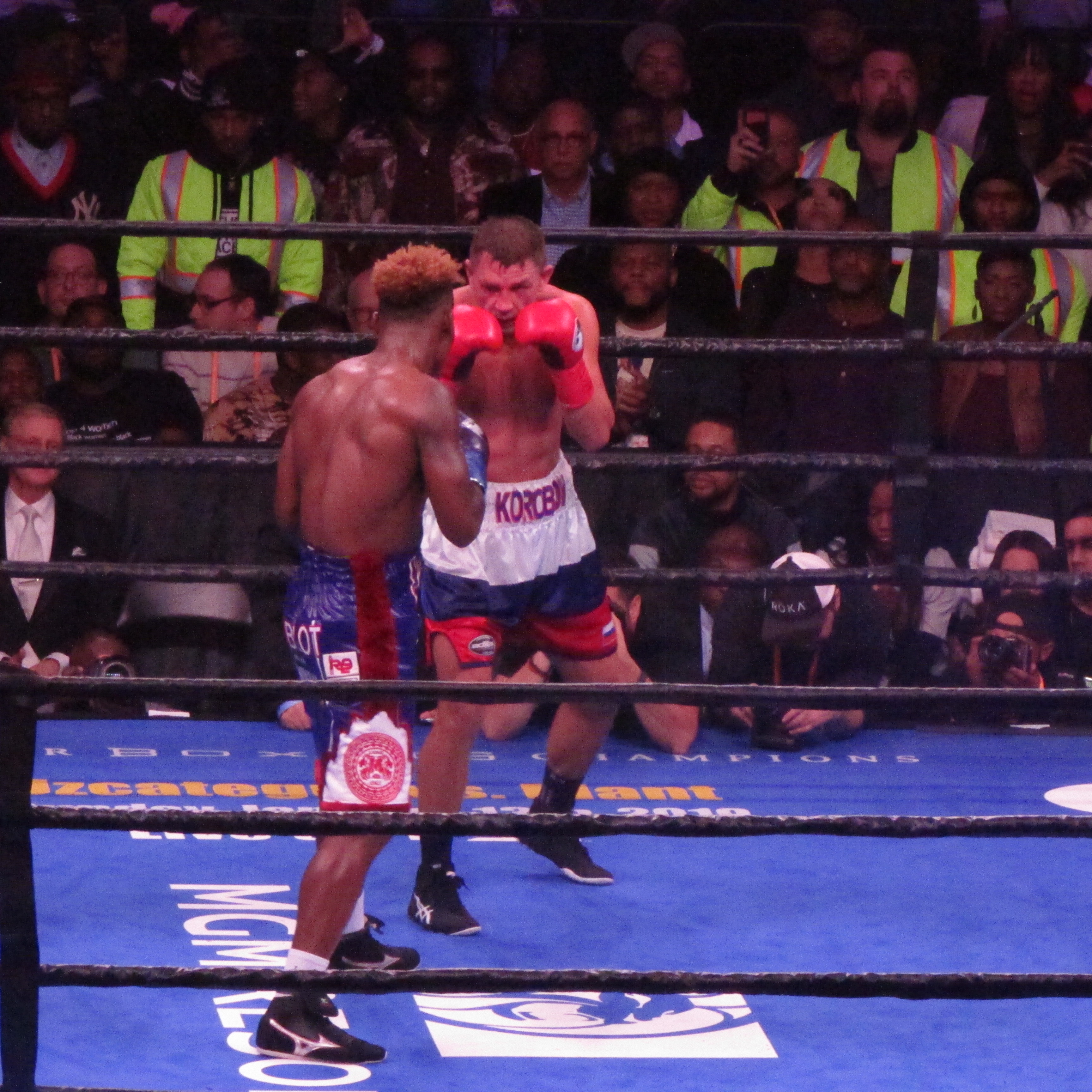
For the main event, Jermall Charlo came out defending his interim Middleweight title against Russian Matt Korobov, who gave a good account of himself. Charlo looked more like a fighter who wanted to revenge his twin brother’s defeat than a fighter who needed to fight a more smarter fight against a canny opponent. Korobov counterpunch effectively out of his southpaw stance and throughout the first half of the fight, Charlo looked puzzled as he kept getting nailed with straight lefts. At the halfway mark, I had the fight four rounds to two in favor of Korobov and wasn’t until the sixth round that he started to connect with solids straight right against Korobov and I had him winning six of the last seven rounds as he certainly lost most of the early rounds.
It was until the last round did Charlo get Korobov in trouble as he nailed Korobov with big shots repeatedly but Korobov refused to go down. I had this fight 115-113 for Charlo and while the judges agreed that Charlo won the fight, they had a bigger spread and I couldn’t understand the 119-108 score at all. There was no way that Korobov won only one round and Charlo got credit for a 10-8 round on that card. The other cards were reasonable at 116-112.
Charlo fought a poor first half of the fight but adjusted over the second half but is he ready for Alvarez, who is the present king of the Middleweight or triple G’s? Based on this fight, I would even rate Danny Jacob a slight favorite.
Pictures of Boxing at the Barclay Center








By Dr. Larry Fedewa (December 15, 2018) The 2016 update of the 2010 U.S. Census shows the current distribution of the U.S. population at 80.3% urban and 19.7% rural. (Michael Radcliffe, Geography Division, U.S. 2010 Census Report, issued December 2016)
This simple fact is perhaps the most significant reality in the current political polarization of the United States’ electorate. On its face, it signifies that the current Republican Party is doomed to disappear unless it can make some fundamental changes.To detail some of the differences between urban and rural realities, let’s look at a few.
1.Living Environmenta. City folks live in densely populated areas. While this factor has many advantages in terms of employment, schooling, shopping, transportation, etc., it also presents many threats. Privacy, crime, traffic, and a general proximity of government – in schools, police, regulations, zoning, etc. which make some level of government an ever-present factor in almost everything a person may want to do. b. In contrast, rural folks generally have a lot of room to live in. This allows them a high level of privacy and keeps their connections to government minimal, mostly for emergencies.
2.Personal Freedom vs Government Presencea. Any changes a city person may want to advocate, whether traffic, child’s school, voting places, building a house, or many other possibilities requires convincing other people to join in. Thus organization, publicity, money and time are key components of change. b. Rural folks can make many changes in their lives without anyone’s permission. Their privacy begets a high degree of personal freedom.
3.Amenitiesa. Some of the advantages of urban life are proximity to medical and social services, whether hospitals, shopping options (including economically indexed stores and entertainment), cultural events, ball parks, and a myriad of other opportunities. b. Rural locations offer few of these amenities as a rule, and some of these deficiencies are critical, particularly shortages of medical facilities.
4.Religiona. There are many other differences, including a sense of faith and religion. The farmer lives close to nature and witnesses every day the power and wonder of life, growth, weather, birth and death. For the farmer, faith in God becomes an apparent explanation of all these mysteries. Religion provides an expression of these insights as well as fellowship in the quest. b. The city dweller is surrounded by the works of humans, from physical buildings, highways and artifacts to the power of change which resides in humans, whether political, judicial, or financial. People in the city are removed from the wonders and mysteries of nature by layers of human power, which must be appeased in order for life to proceed. Since religion does not directly provide answers to the most pressing problems of daily life, its importance is often compartmentalized and downgraded, frequently to oblivion.
5. A Practical Example: Gunsa. So, how does this difference in world views affect the Republican Party? The differences have a profound effect on political views. To take one obvious example: guns. City people tend to see guns as a threat, since the only times they would usually be exposed to guns would be in the commission of a crime. It seems obvious that outlawing guns would reduce the criminals’ opportunities to procure and use guns for nefarious purposes. The observation can be made that criminals can always find a way to get a gun whereas an ordinary citizen could not. But, since few ordinary citizens have guns anyway, outlawing guns would not change that factor and it might limit casual crimes with guns. So, why not do at least one thing to limit crime?
b. The farmer and hunter find this idea ludicrous. To them, guns are tools of protection of livestock from predators, hunting meat for enjoyment or necessity, and just part of life. They react to calls for outlawing guns as an attack on their personal freedom.
6.Republican versus Democrat – Political positions
a. The Republican Party stands for personal freedom,The Democrat response increasingly is: majority rules (including the elimination of the electoral college and the two-senator system),
b. Republicans favor a strong defenseDemocrats favor a nominal military for “imaginary” defense (leading to isolationism),
c. Republicans are committed to free market capitalismDemocrats want a socialist economic system which is tightly controlled by the central government.
d. Conclusion: Today, the Democrats are the party of the secular city and the Republicans are the party of rural America.How can Republicans compete? The challenge, of course, is to pay attention to the secular city while not abandoning rural America.
Some ideas:1. Open Republican eyes to the challenge and stop acting as though this is 1950’s America. The 2001 and 2016 elections should have been enough of a wake-up call, i.e. depending on the electoral college to win the presidency.
2. Take a leaf from the Obama playbook, and formulate a platform containing solutions for each of the urban constituencies – blue collar workers, unions, suburbanites, women, Blacks, Hispanics, evangelicals, even the gay contingent.
3. Much of this work was begun by Ronald Reagan with workers, and George W. Bush with Hispanics, and revived by Donald Trump with Evangelicals. The current alienation of the Black community from Donald Trump must be overcome. They are ready to be converted – after having been abandoned by the Democrats for a generation. But they must be invited! Trump has the right idea – what do they have to lose? So, where are the leaders of Black Republicans? Herman Cain, Robert L. Johnson, Charles Payne, Condoleezza Rice, Colin Powell, Denzel Washington? Somebody has to talk to them. They must be made to feel welcome.
4. The communication capabilities of the Republican Party seem in need of overhaul. The first step is to come up with the right message. This requires the city skill of organization. Somebody has to reach out to all the different constituencies, identify their needs and hopes, find spokespeople, get them together and develop meaningful messages. Secondly, outreach to these communities has to be developed and executed, Republican clubs started, etc. There are thousands of people in the Party who know how to do all these things. They have to be energized.
5. So, get focused and get going. Don’t wait for an Abraham Lincoln to come along after the dissolution of the Whig Party. That may be too late. ©
2018 Richfield Press. All rights reserved Dr. Fedewa has been a guest on the Donelson Files and has his own podcast, the Dr. Larry Show.
?
I’ve been a Netflix user for 12 years and recently I’ve noticed that Mafia/mobsters shows like Bad Blood, Narcos and El Chapo are becoming very popular.
I find the whole matter fascinating because I believe it is a peculiarly American phenomenon. No other country in the world glamorizes crooks and criminals as much as the US… except maybe for Korean movies.
But I wonder why?

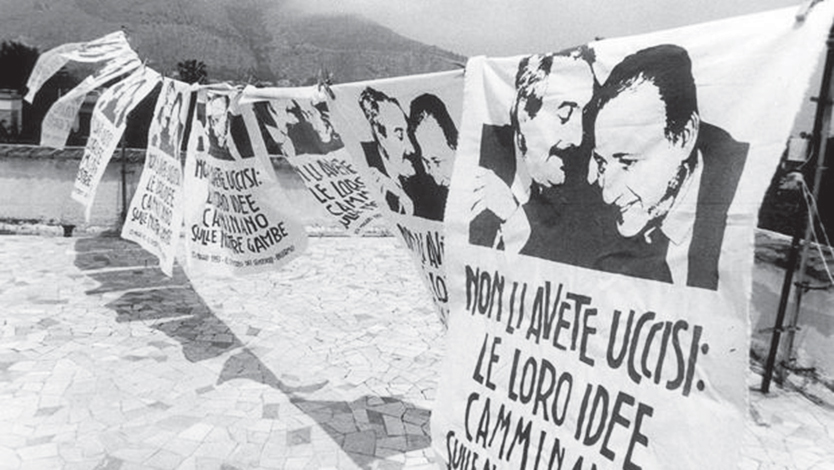
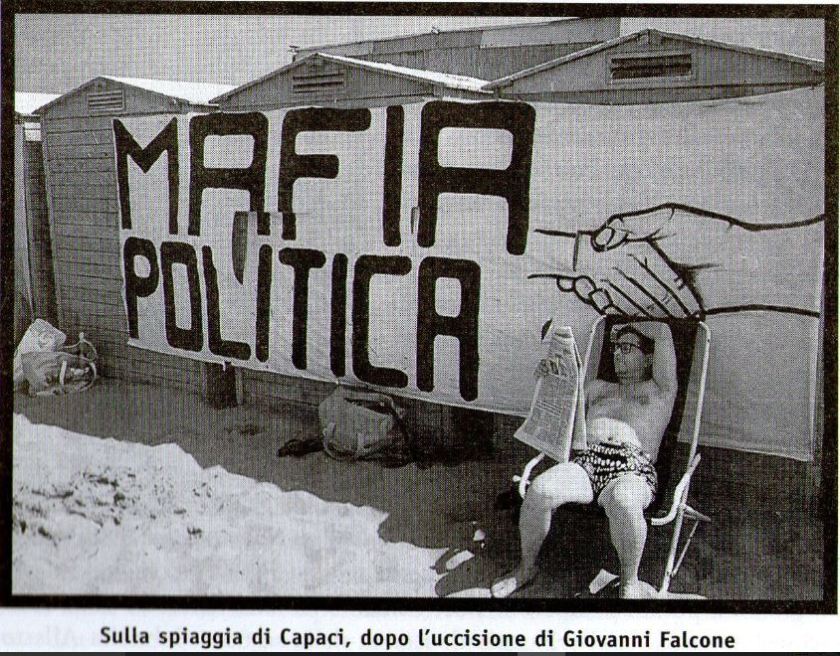
See I was born and raised in Italy. I grew up watching tv shows and movies like “La Piovra,” “Falcone,” “La Scorta,” and “Gomorra.” Movies that do not romanticize the Mafia, but that shows its sad, grim truth, and that tragically describe how corruption destroys the lives it touches.
So again why is it rather perceived as an awesomely cool and adventurous way of life in America?
I’ve been thinking about it, and of course, I could be entirely off the mark, naive and clueless, but I feel like I might be onto something.
So without further ado: I think that America’s mafia true romance has to do with the fact that America is a safer and overall more upright country.
I don’t mean to say that in the US people don’t steal or kill.
But perhaps because America is such a young nation founded on the values and ideals of Positivism and since it is not only a country but a vast continent, the Mafia mindset with its bribery, and intimation tactics hasn’t taken hold as much as it did in Italy.
So how old are these Italian Mafia values? Well, I remember reading Alessandro Manzoni’s I Promessi Sposi (The Betrothed) when I was in high school. Set in northern Italy in 1628, during the oppressive years of direct Spanish rule, the novel narrates the story of Renzo and Lucia, a couple living in a village in Lombardy, near Lecco, who are planning to wed on 8 November 1628. One day the parish priest, Don Abbondio, walking home on the eve of the wedding, is accosted by two “bravi” (thugs) who warn him not to perform the marriage, because the local baron (Don Rodrigo) has forbidden it. That passage in the book reveals that practices mafiose are old, have deep roots and touch the lives of innocent people.
Already at the beginning of the 1200s, nobles, in the absence of laws, were
appointing GODFATHERS to coordinate bandits and form their private policies; bandits had the impunity (until they were not considered useful anymore and betrayed)
In 1569 the reform called biennalità of the judges controlled by Spain
enabled the members of this tribunal (called familiari), and their friends and relatives to:
– Not pay taxes
– bring weapons
– Avoid the Ex Abrupto procedure (the nobles knew when they were accused, and with fake testimonies, they could demonstrate their
‘innocence’); the corruption of this tribunal was justified with today would be called “reason of State.”
In any case impunity to the nobles and their criminals was the rule.
People never testified because they perfectly knew what side justice was on. They practiced omertà: the cultural acceptance of mafia values, and the refusal to collaborate with the Authorities of the State.
Extortions at the Palermo market are documented since the 1500s. These forces shaped the values of Southern Italy, and are still active today.
So, again why are Italian films about the Mafia so different from the American ones?
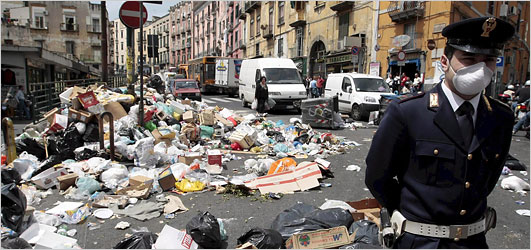
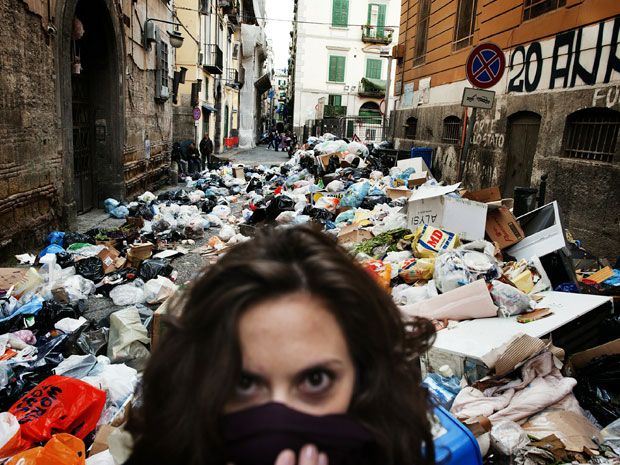
I believe it has to do with the fact that in Italy the Mafia is pervasive in the lives of regular people. The Sicilian Mafia controls the water supply and the construction business. In Naples, it manages the garbage business.
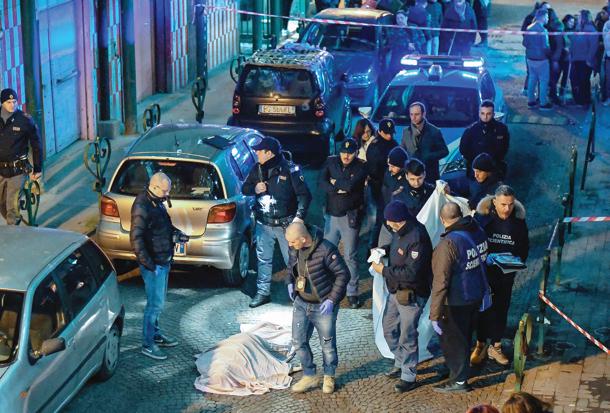
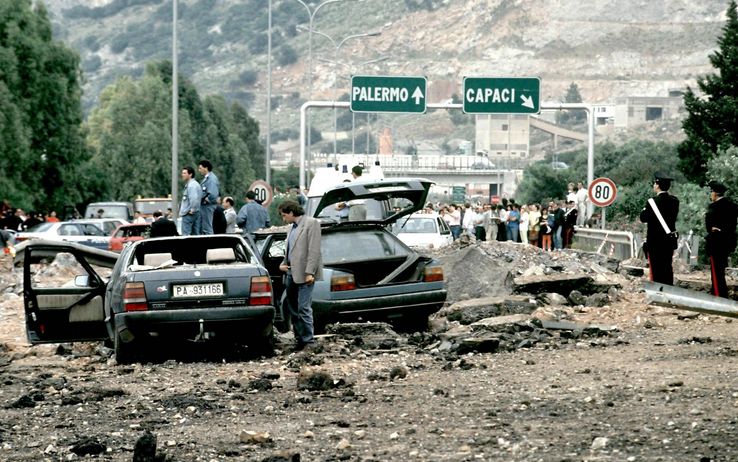
Assassins might ride a motorcycle and shoot their target in plain daylight killing innocent bystanders, and the police won’t do a thing. You might be at the local bar on a sunny Sunday afternoon when a bomb goes off, or a shooting spree occurs killing everyone.
People through the centuries have grown accustomed and resigned to this way of life. They’ve been beaten down, and they’ve never been saved. Every hero or heroine who has stood up for them has been assassinated. There’s no faith in justice. People must leave to escape that way of life.
Thankfully for me and everyone else, this way of life is foreign in America. The severity of this criminal existence is unknown for many Americans who lived outside of major cities where the Mafia operated.
American Mafia doesn’t affect ordinary people, as much as it alters the lives of the Neapolitans or Sicilians. However, the Mafia did impact many blue collars workers, in particular, the Teamsters, whose pension funds were diverted in the hands of the Mafia to build Las Vegas casinos along with the drug trade, racketeering, and gambling.
Many Americans even though they were not aware of the mafia were impacted, but they can still fantasize about the “cool life of crime” through shows, games, and movies like the Sopranos because they don’t experience bombing and shooting on a regular basis.
The reason why Italian films and shows don’t glamorize the Mafia is the same reason why Americans don’t glamorize slavery. There are no shows that romanticize slavery, am I right? Everyone would be appalled at such and rightly so. So the same goes for Mafia shows in Italy.
Film and TV are a reflection of the culture and the time we live in, and thankfully for us, we live in America where the basic honesty and decency of people allow us to fantasize about the outlaw experience instead of living it.

The crucial issue for the GOP is how do you deal with a President up for re-election that many Americans personally don’t care for but whose policies are popular? If Trump decides to run for re-election, the GOP candidates will have to run with the top of the ticket and our goal is to review the divide between Trump policies and many voter’s personal disdain for Trump to find issues that can form a winning coalition. A national online panel poll by Evolving Strategies finds issues that many Trump voters and non-trump voters agree on to design a campaign that emphasizes issues over personalities. In another report Americas Majority researcher JD Johannes will dig deep into the personality and identity factors that will affect elections in 2020 and beyond.
The first reality is that less than 30% of all voters approve of Trump’s personal behavior and only 2/3 of Trump Voters approve of the President’s personal behavior.
However 45% of voters approve of the job he was doing. This poll is similar to others as recent YouGov and Reuters have his approval at 45% and Rasmussen over the past months had seen his poll numbers ranging from 46% to 51%. So many Americans, in spite of their visceral dislike of Trump, do appreciate the job he is doing. As the chart clearly illustrates, there is sharp electoral divide on Trump’s job approval with only tiny sliver of non-Trump voters approving of the job he is doing.
That sliver of non-Trump voters more than doubles when it comes to approving his economic policies. Overall 51% of voters approve of his handling of the economy and that includes 97% of Trump voters and 16% of non-Trump voters. So many voters appreciate the growing economy and this could have helped save the Senate even though it did little to help the House.
48% of voters including 97% of Trump voters approved of how Trump handles trade issues along with nearly 12% of Trump not trump voters.
47% of voters along with 96% of Trump voters and 9% of not Trump voters favored his approach to foreign policy
To go with 46% of voters and 96% of Trump voters and 10% of not Trump voters approve his immigration policy.
Many voters view Trump with personal disdain but are more likely to support his policies. As we examine specific policies, we found that there policies that a significant portion of Not Trump Voters agreed with Trump policies even if they personally disliked the man.
Abortion: 55% of all voters including nearly 40% of not Trump voters and slightly over three quarters of Trump voters favored a ban on abortions after 20 weeks. This correspond with other polls we conducted with Voice Broadcasting and Cyngal in which the majority of voters favored restricting abortions after the second trimester. Even many who viewed themselves as pro-choice agreed that abortions are not unlimited right for women and that babies are endowed with right to life, the only debate was where do you draw the line to protect the unborn. While many within the Republican have decided that abortion was a losing issues for many voters, our data showed that so many Americans are now pro-life that the liberal position is out of step with the mainstream.
Healthcare On single payer, 80% of not Trump voters favored single payer as oppose to only 16% of Trump voters and 55% of all voters but when asked about allowing health insurances that provides choices and fewer benefits to reduce cost, we see consensus. 77% of all voters favored allowing more choices and lower priced healthcare plans along with 65% of not Trump Voters and 92% of Trump voters.
The reason health care is a near permanent issue is the constant rise in premium prices. Even in many employer-sponsored plans the employee’s portion of the premium for a family plan is nearly as much as their mortgage. Many voters see the tax increases associated with Medicare For All as just shifting money from the Premium Bucket to the Federal Income Tax Bucket with the advantage of guaranteed health care coverage for pre-existing conditions and if they are out of work.
Republicans need to talk about the need for choices, lower prices and most importantly, allowing voters to keep their health care plan if they like their health care plan and keep their Doctor, if they like their Doctors. These are values that all voters agree with and Single player plans discard the choice elements as the government will determine your care, your plan and your doctor.
Tariffs– Voters are undecided whether Trump’s tariff strategy is designed to increase trade and get better deals or are protectionist approach to protect jobs. One friend who is a free trader mentioned to us that he can understand the approach of using tariffs to get better deals and increase trade but he is not favoring tariffs as a permanent approach. Trump ran as a protectionist but his approach so far has moved toward getting better trade deals as with his recent NAFTA deal in which minor adjustments were made to help protect American jobs while maintaining the main framework of trade. On occasion the White House has stated that the goal is zero tariffs and that can only happen when there is truly free trade. As long as other countries erect barriers, the White House is going to tit-for-tat against those countries.
62% of Voters including nearly 39% of not Trump voters and 92% of Trump voters favor Trump tariffs as a means to get better deals, while nearly 56% of voters view tariffs as need to protect jobs including 32% of not Trump voters and 86% of Trump voters.
Trump policies of using tariffs as a strategy to either protect jobs or get better deals have 32% to 40% of not Trump voters already in agreement with Trump on this issue and this gives GOP an opening to use this to get enough of not Trump voters to join their coalition.
Debts, Deficits and Inequality– There is one issue in our polling that Americans agree on, increasing debts, deficits or spending hurts the economy and in this poll, 87% of all voters agreed along with 83% of not Trump voters and 92% of Trump voters. The deficits worry voters even it doesn’t worry politicians and if nothing else, this shows the potential of a Ross Perot candidate in 2020 or close facsimile. Trump may be that figure and the GOP as a Party can promote an agenda that protects job creation and growth while dealing with deficits and debts.
Only 37% of voters wanted politicians to focus on dealing with inequality and only 59% of Not Trump voters favored reducing inequality between the 1% and the rest of us, so that means nearly two out of every five not Trump voters favor policies dealing with economic growth. In this election, the tax cuts produced economic growth but not necessarily loyalty among many voters as those suburban voters in blue states saw their taxes going up on 2019 due to the deduction reductions in state and local taxes. Instead of blaming those state legislators who jumped the taxes upward, they blame their GOP congressmen. And in many cases the benefits of the tax cut for individual workers were gobbled up by health insurance premium increases so they never observed an increase in their paycheck. However, as we have seen, growth is important to voters, more so than dealing with inequality. All of our pollsters, Cyngal, Voice Broadcasting and Evolving strategies saw this trend.
Republicans need to view economic issues as promoting job growth and moving the economy forward by promoting a fair opportunity to succeed. One way is to talk of an economic policy that uses Tariffs to open up trade opportunities and liberalizing trade while protecting jobs, a fine line to be sure but something that can happen along with reducing debts, deficits and keeping federal spending in line. Voters will understand the connection between the two if there is a political party that defends it.
Immigration-Evolving Strategies, like our other pollsters, sees a divide on immigration between keep immigration levels where they are or increasing them and those voters who view increased immigration as preventing assimilation or hurts jobs of those in the lower income and lower middle Class. Many voters no longer believe that increasing immigration levels helps the economy and their own economic prospects. 47% of voters see high immigrations levels as diluting traditional values including 20% of Not Trump voters and 84% of Trump voters. One of every five not Trump voters view increase immigration as a negative not a positive. A key question for future study is are there enough voters willing to switch on this issue if this is combined with Republican plan on Tariffs to induce better trade terms and pro-growth economic message for the Middle Class?
Energy dominance and climate change– 39% supported energy dominance which is lower than other polls we did, but Evolving Strategies used the qualifying phrase “by reducing regulations” that other pollsters did not. Without the latter phrase, the support went up over 50% and if Republicans can convince voters that energy dominance can be done safely and protect the environment, then it is a winning issue.
We have found in all of our polls that the majority of voters when presented with a more accurate view of the scientific debate over climate, reject the notion that human activity is the main cause of climate change for a more nuanced view that human activities along with natural events are behind climate change. All groups were similar with 48% on this score and when you combined those who believe in natural events causing climate change with the combinations of both human events and natural events, over 50% of even Not Trump voters rejected the alarmists positions that climate change is strictly or mostly a man-made affair.
Conclusion- There are many issues in which Not Trump voters agree with Trump voters in large enough numbers for the GOP to make the case that they are the party of change and opportunity and build a winning coalition. As the Democratic Party moves left, the GOP has a chance to entice enough Not Trump voters to join their coalition even with their personal dislike of Trump.
On abortion, the majority of voters are pro-life and support restrictions on abortion, the only question is where to begin the restrictions. On trade, at least a third of Not Trump voters see the merit of Trump trade strategy. On economic growth, Trump and Not Trump voters view increasing debts, deficits or even spending as hurting the economic showing the rejection of Keynesian economics. From 47% to 52%, voters overall approve of Trump handling of trade issues, immigration, economy and foreign affairs even if they don’t particularly care for him on a personal level.
On Health care, most voters prefer choices in their health care, they want to keep their plans if they like them or keep their doctor and here the GOP can win if they chose to promote a health care plan that offers those things.
The Democrat’s leading candidates will either be billionaires like Michael Bloomberg or Tom Steyer or they will go to younger more leftist candidates such as California Senator Kamala Harris, so likeability issue may not be factor as it wasn’t in 2016 when the Democrats nominated one of the most unlikeable candidates ever in Hillary Clinton. Ted Cruz survived a tough Senate race in 2018 despite being unlikable and outspent two to one, so being likable could be overlooked if the alternative is worse and the plan that Trump promoted in 2016 is working.
For many Republican candidates, there is a discomfort with having Trump on top of the ticket. Many GOP voters though like Trump more than their candidates for U.S. House and Senate so Republicans need to run on a positive message that they will be the party of reform and the Middle Class. Even with the recent gains by Democrats, the Democrat Party is still a Party of the two coasts and no longer the party of Middle America or the South. Much of Middle America and the South still remains Republican so the key issue for the GOP is whether they can get enough of the Democratic base to build a new coalition in key Midwest States just as Michigan or Wisconsin plus make inroads in Western states just as Colorado and Nevada.
In Florida, school choice prompted 18% of black women to vote for Ron DeSantis and this alone would have propelled DeSantis to victory. In Tennessee, Martha Blackburn cleaned up in the suburbs, exceeded national average among blacks and Hispanics (gaining 45% of Hispanic voters in her state). In Missouri, Josh Hawley had similar success in both the Suburbs and with minorities plus turnout among black voters cratered for Claire McCaskill and Hawley did very similar among Hispanics than Blackburn.
De Santis, Hawley and Blackburn received over 50% of suburban votes while on a national average the GOP only received 49%, the same as Democrats. The lesson for GOP is to study these candidacies. Rick Scott did well among Hispanics and that even includes Puerto Rican voters and like De Santis, expanded his reach into the Suburbs.
These candidates expanded upon the Trump coalition of 2016 and won as a result. The key for Republicans is to fight on issues and expanding the theme on fair opportunity to succeed. In 2020 and as long as the economy holds, the 2020 election will be a values election with values meaning more than just traditional social issues but more broad value battle including should voters chose their health care plan and their doctors or should the government do it for them? On the abortion issue, the battle will be on the value of when is life worth protecting or does the unborn allowed no rights to life? On economy, which values is more important, the right to a job and opportunity or do we engage in the politics of envy at the expense of opportunity.
The GOP won’t have an easy time with Trump on the top of the ticket due to his personality but his ideas are more popular than his opponent’s will be and that is the battleground that needs to be fought, the battleground of ideas.
I mention that the offense that the Redskins ran in the fourth quarter with Josh Jackson would be no different with Colin Kaepernick, except that Colin is a better quarterback. The kicker is that Washington is still in the playoff hunt, just behind the Eagles, Panthers and Vikings. If the Redskins win all their remaining games and Vikings lose one, they are in. They play the Jaguars, Titans and Eagles who may be without their number one quarterback in Wentz. All winable games.
My view is that Colin should play and have stated this on the Batchelor pad with LA Batchelor and while I may not like his politics but we witnessed a running back for the Chiefs who played for nearly three quarter of the season even though the NFL knew that he had beaten his girlfriend in February. So the NFL doesn’t look so good now but then Roger Goddell in my view is the worse commissioner of any major league but that is debate for another time.
For Jay Gruden, he has been hit with sever injuries bug so there are things out of his control but one thing in his control is the daily lineup and when you pick Mark Sanchez over Colin, that is on you. Gruden has one last chance to save his job and we will see what he will do with that gift.
Jay Gruden era will not be officially over until after the season is over but it is unofficially over. When the Giants, the New York Football Giants, had a 34-0 lead at halftime, my first thought was how does a team with a shot at the playoff be this unprepared to play? Part of the problem was injuries but if there was a team they should be beat that would be the Giants and their best receiver, Odell Beckman, Jr. wasn’t even playing. The game ended when Sanchez threw his first of two picks that came back for a touchdown, the players knew they weren’t going to score and the defense simply gave up. The whole team did or they did until the fourth quarter when Josh Johnson racked up 240 yards by himself, threw on touchdown and ran for another.
Watching this and the first thought was this what the Redskins offense would have looked like if Kaepernick was playing. A running quarter back who would give the depleted offensive line a break and maybe make a few plays to keep the defense off the field. I am not fan of Kaepernick activism and to quote John Lennon, “You won’t make it with anyone anyway if you keep carrying pictures of Chairman Mao” and that decribes Kaepernick who once showed up in Miami in a Fidel Castro T-shirt. Needless to say, the Dolphins passed on him and signed Jay Cutler instead. Not that they benefited from Cutler but better than explaining to many of Dolphins fan base that you signed some, commie loving, Castro loving player.
Redskins could have signed him and they wouldn’t be worse off than they are now. Fans wants victories and a franchise starved for a playoff spot, it would have been worth the effort to sign him and if he flopped, so what. You gave it your best shot but Sanchez flopped and now Skins are out of the playoff spot. A season that four weeks ago was looking magical is now over.
 The Donelson Files